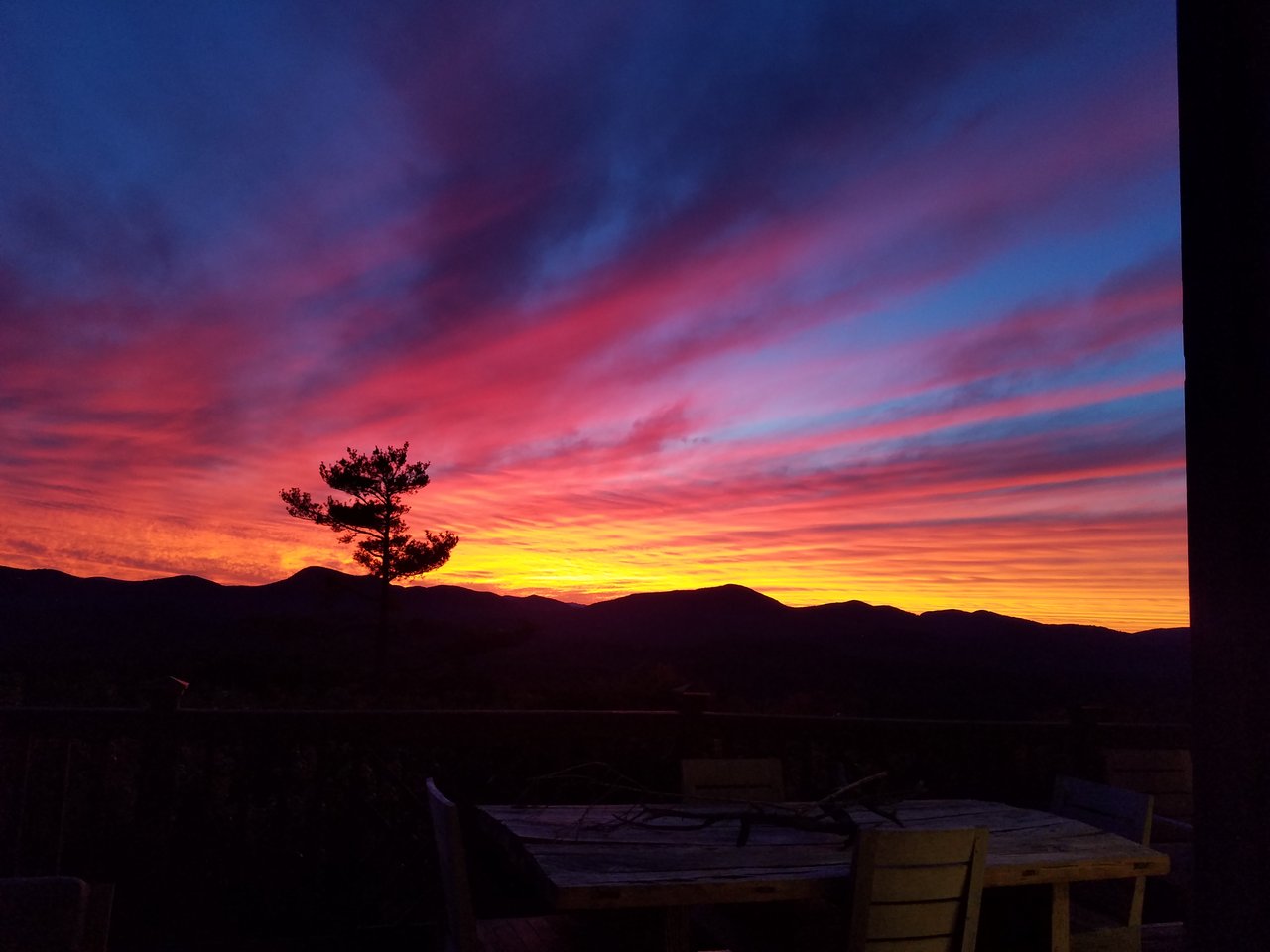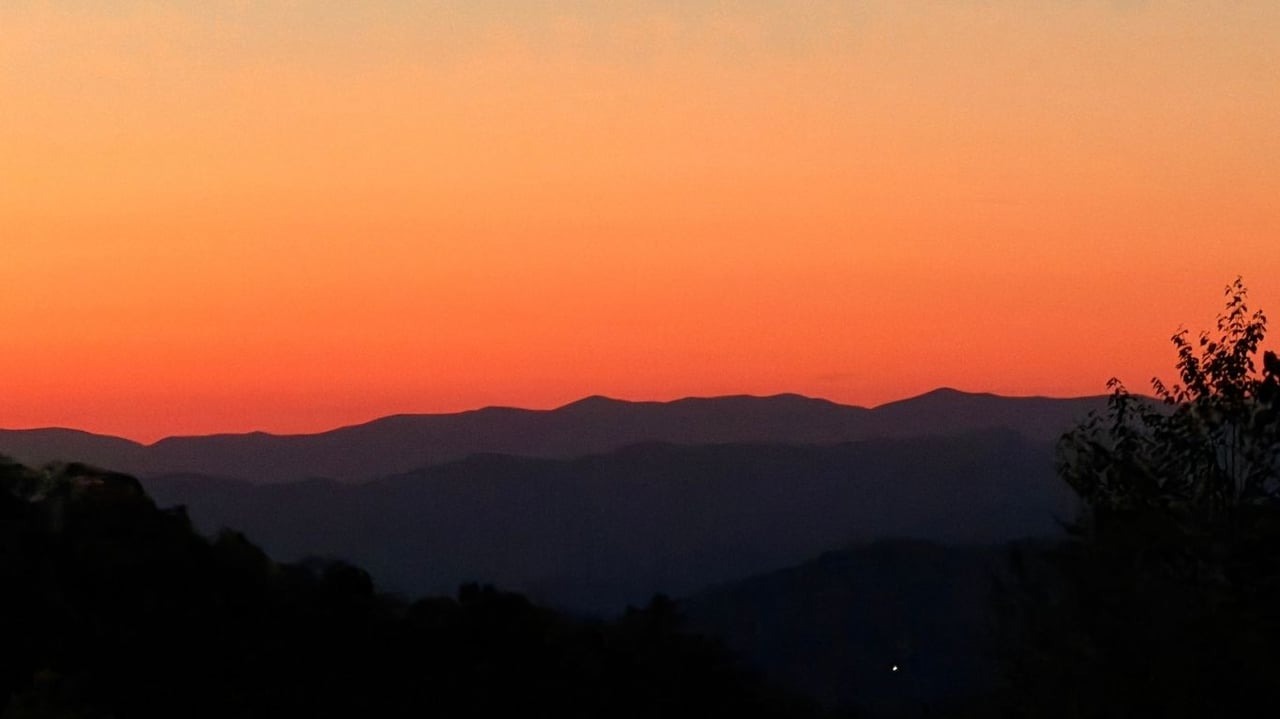
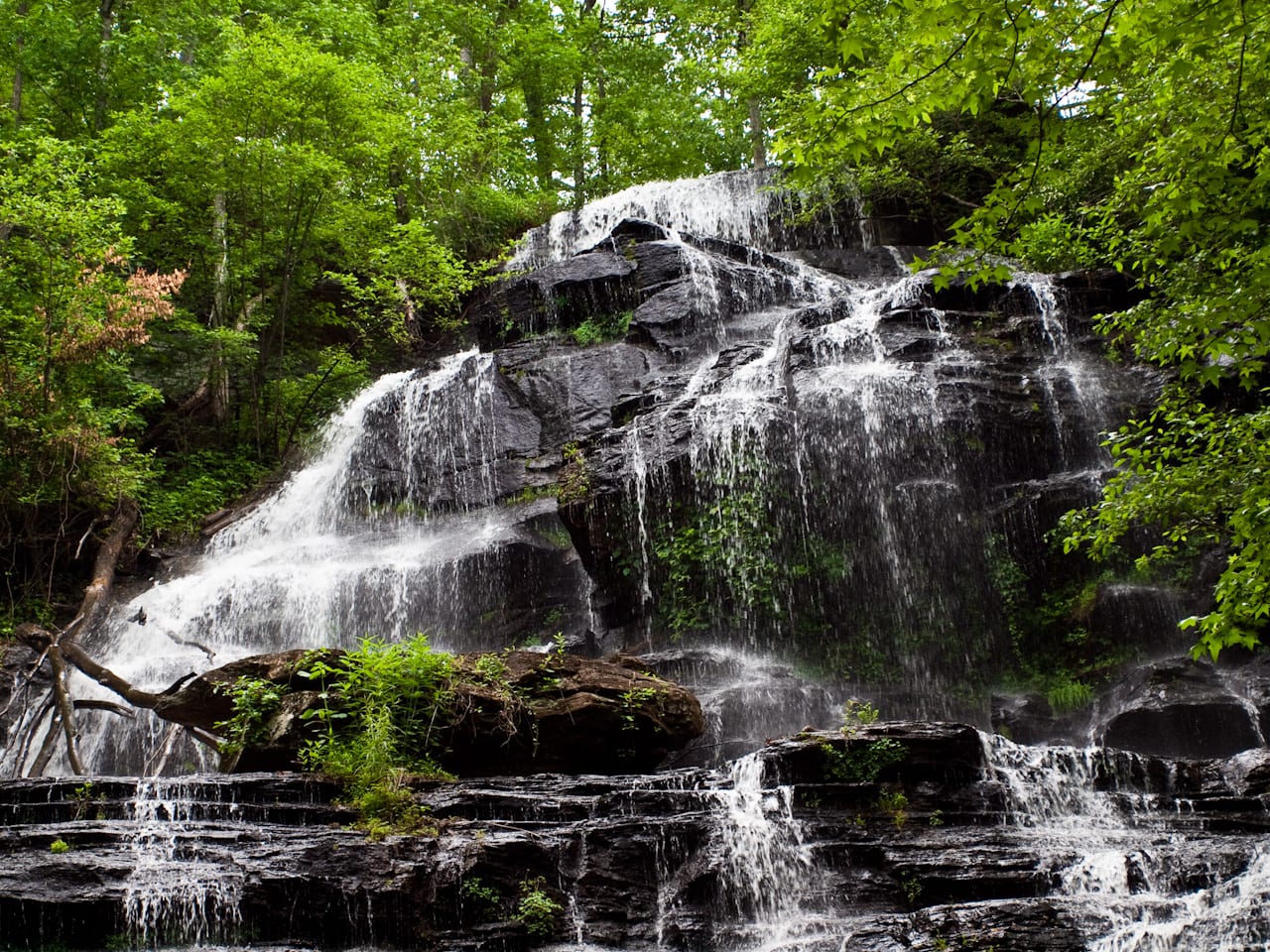
The Highlands–Cashiers area sits in the middle of one of the great wilderness regions of the eastern United States. Within thirty minutes of Main Street Highlands, you can stand beneath a waterfall taller than a ten-story building, hike a ridge with views across four states, or wade into a trout stream that runs so cold in July it takes your breath away.
This is not incidental to life on the Plateau. For many residents, it is the entire point.
The Waterfall Capital of the East
The southern Blue Ridge has more waterfalls per square mile than almost any region in North America outside the Pacific Northwest. The geology here — ancient folded mountains with dense rainfall and resistant rock formations — creates the conditions for cascades everywhere you look.
Dry Falls, just north of Highlands on Route 64, is one of the most accessible and dramatic: a 75-foot cascade that you can walk behind without getting soaked (which is how it earned its name). Bridal Veil Falls, nearby, once flowed directly over the old highway — cars would drive through for a free car wash. Lower Cullasaja Falls drops 250 feet in a gorge that takes the breath away. The Whitewater Falls complex, near the NC/SC border, features one of the highest waterfalls east of the Rockies at 411 feet — a genuinely staggering sight.
For serious waterfall hunters, a dedicated weekend could fill with a dozen or more, each different in character, each worth the walk.
Hiking: From Casual Strolls to Serious Climbs
The trail network in and around the Plateau ranges from gentle nature walks suitable for any age to serious summit climbs that will test experienced hikers.
Whiteside Mountain offers one of the most dramatic short hikes in the Southeast — a 2-mile loop with sheer granite cliffs dropping 400 to 700 feet and views that encompass miles of Blue Ridge ridgeline. It's one of the most visited trails in the region, and deservedly so.
Satulah Mountain, rising directly above Highlands, rewards a short but steep climb with a 360-degree view that puts the entire Plateau in perspective. It's a ritual for many locals — the kind of hike you do dozens of times and find something new each time.
The Bartram Trail and portions of the Appalachian Trail corridor are accessible from the Plateau for those who want multi-day wilderness experiences. The Highlands-Cashiers Land Trust maintains an expanding network of protected lands with trails open to the public — an extraordinary community resource.
Fishing, Kayaking & Lake Life
The Plateau's rivers and lakes offer world-class trout fishing in some of the coldest, clearest water in the South. The Chattooga River, the Cullasaja River, and the headwaters of the Horse pasture and Whitewater Rivers attract fly fishers from across the country.
Lake Glenville — the highest lake east of the Rockies — is the centerpiece of recreational water life on the Plateau. Kayaking, paddleboarding, and boating on Glenville are summer rituals. Sunset on the lake, with the ridgeline of the Blue Ridge reflected in water that is genuinely turquoise in the afternoon light, is one of the great simple pleasures of life here.